









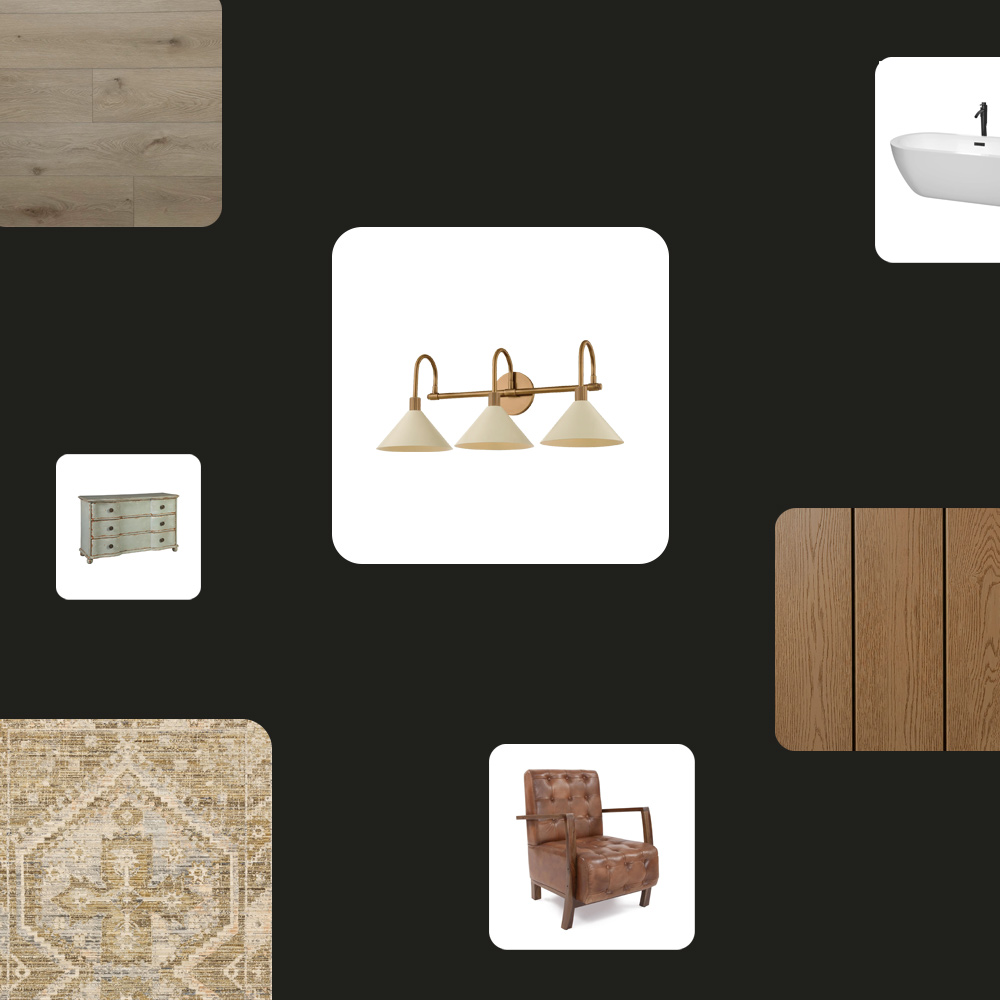



The average American spends nine months planning a home project before spending a dollar. Nine months of screenshots, Pinterest boards, emails to designers, trips to showrooms, and still, when the work is done, a nagging feeling that something doesn't quite look like the inspiration.
That's the problem we set out to fix. Not the renovation itself, but the unbearable uncertainty between 'I want to change this room' and 'I know exactly what to buy.'
The gap has always been visualization
Design tools have existed for decades, but they've always had the same flaw: the products in them aren't real. You can mock up a kitchen in any app on the market and get a beautiful render, but when you go to buy the cabinet handle you loved, it doesn't exist at any price point you can find.
We wanted to build something different. Every product in a Homeform render is a real SKU from a real brand, priced today, purchasable in the next click. That constraint (real products only) is the core of everything we do.
If you can see it, you can buy it. That sentence is the entire product.
Open participation from the start
We made a decision early on that Homeform would be open: any brand with home products could list, no exclusivity required, no curated waiting list. The catalog grows with participation. A one-person ceramics studio and a national flooring chain both belong here.
That openness creates something no curated platform can: a catalog that reflects the actual market. When a homeowner is designing a yard, they should see the native plants that grow where they live, from the nurseries that actually sell them, not a selection vetted by a marketing team in a different city.
What we're building toward
Homeform is a platform for the built environment: rooms, exteriors, yards, new home builds, commercial properties. The visualization engine is one layer. The open brand catalog is another. Commerce wired directly into every image is the third.
When all three compound, you get something genuinely new: a place where the distance between 'I want that' and 'I have that' is measured in clicks, not months.
That's what we're building. We're glad you're here.